Digital Product Chargebacks and Refunds: How Your Payment Processor Handles It
Digital goods have a 1.8% average chargeback rate - more than triple the rate for physical goods. Here is exactly what happens when disputes hit, what processors do, and what the fines look like at scale.
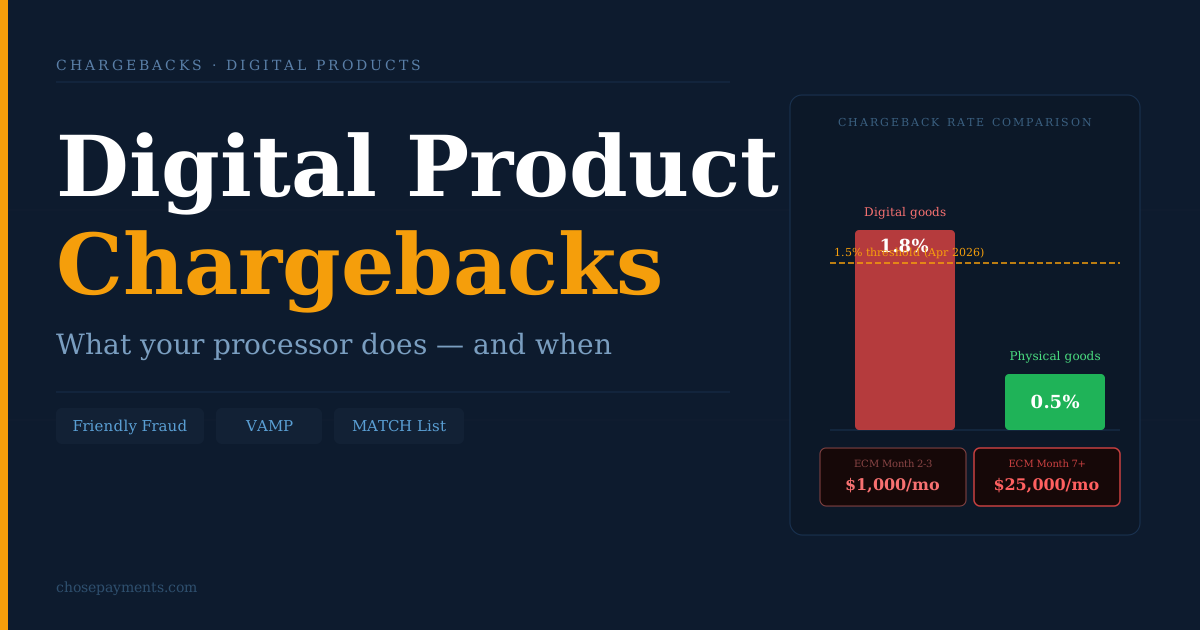
Digital products - software, SaaS subscriptions, ebooks, online courses, downloadable templates, gaming items - have a chargeback rate that is more than triple the rate for physical goods. The global average for digital goods is 1.8%, compared to 0.5% for physical product ecommerce.
That gap is not accidental. It reflects structural features of digital transactions: no physical delivery to confirm, no shipping signature, easier anonymity for bad actors, and a customer behaviour pattern called friendly fraud that accounts for approximately 75% of all ecommerce disputes.
Payment processors are aware of this pattern. How they respond to it - through automated account risk models, reserve requirements, account suspensions, and card network fine passthrough - directly affects the financial stability of any digital product business.
Why Digital Products Generate More Chargebacks
No physical confirmation of delivery: When a physical product is disputed, the merchant can provide carrier tracking, delivery confirmation, and photos.
For a digital download or SaaS subscription, the evidence of delivery is a server log, an email receipt, and access records - documentation that cardholders and their banks discount heavily because it cannot be independently verified the way a physical shipment can.
Friendly fraud is dominant: Friendly fraud is when a legitimate customer disputes a charge they actually authorised, with no intention of returning value. The cardholder received the digital product, used it, and then disputed the charge claiming they did not authorise it.
Chargebacks911 and Mastercard's own data place friendly fraud at around 75% of total ecommerce disputes, with digital goods disproportionately affected because there is no physical item to return.
Subscription billing patterns: Recurring billing generates disputes when customers forget they subscribed, lose interest and dispute instead of cancelling, or dispute because they couldn't easily find the cancellation link. Subscription businesses are specifically monitored by card networks under programs designed to catch negative option billing abuses.
High average ticket values: Software licenses, annual SaaS plans, and premium course fees can carry ticket values of $200-$2,000+. A single high-value dispute has more financial impact than multiple low-value ones, and large-ticket transactions on digital goods trigger fraud scoring more frequently.
Visa and Mastercard Dispute Thresholds in 2026
Card networks monitor merchant dispute ratios through formal compliance programs. Exceeding these thresholds triggers fines, mandatory dispute remediation plans, and ultimately account termination.
Visa - VAMP (Visa Acquirer Monitoring Program), effective January 2026: Visa's excessive threshold for merchants in North America, EU, and Asia-Pacific dropped from 2.2% to 1.5% as of April 2026.
- Fine for excessive merchants: $8 per fraudulent or disputed transaction. Fines are assessed against the acquirer and passed to the merchant. Chargebacks911's breakdown of the Visa VAMP program: chargebacks911.com/visa-acquirer-monitoring-program.
Mastercard Excessive Chargeback Program (ECP) - full details at checkout.com/blog/what-is-the-mastercard-excessive-chargeback-program :
Excessive Chargeback Merchant (ECM): 100+ chargebacks per month AND ratio above 1.5%, for two consecutive months.
High Excessive Chargeback Merchant (HECM): 300+ chargebacks per month AND ratio above 3%.
- Fine structure for ECM: Month 1 - grace period, no fines. Months 2-3 - $1,000/month. Months 4-6 - $5,000/month. Month 7+ - $25,000/month. Additional Issuer Recovery Assessment from month 4: $5 per chargeback above the first 300. Monthly reporting fee: $100.
- HECM fines escalate faster: months 4-6 at $10,000/month, month 7+ at $50,000/month.
For a digital subscription business processing $500,000/month with a 2% Mastercard chargeback rate, the exposure by month 7 is $25,000 in monthly fines plus direct chargeback losses. At that point, the processor has almost certainly already suspended the account.
What Payment Processors Do When Chargeback Rates Rise
Stripe monitors dispute rates in real time. At elevated rates (anecdotal reports from suspended merchants put it at 1-2%), Stripe sends a dispute rate warning.
If the rate does not improve, Stripe can initiate a payout hold, freeze the account entirely, or begin a 90-180 day winding-down period. Fund release after Stripe terminates an account typically takes 90-180 days.
PayPal implements a similar approach. A seller above PayPal's dispute threshold (1% for most categories) receives a warning.
Continued elevated dispute rates result in account limitations - restricted withdrawals, declined payments, or full suspension.
Square monitors dispute rates and can hold payouts for up to 30 days initially, escalating to account deactivation if dispute patterns continue.
Traditional acquirers with direct merchant accounts typically provide advance notice (30-90 days) before account termination, a formal dispute remediation plan process, and defined contractual procedures. This is a meaningful difference from aggregator platforms in terms of business continuity.
The Real Cost of a Chargeback
The visible cost is the transaction amount refunded to the cardholder. The full cost is higher.
Transaction amount refunded: $20-$500 (varies by product). Processor dispute fee: $15-$25 per chargeback. Lost product or service: full cost of delivery.
Dispute management time: 30-60 minutes per dispute. Network monitoring program fees if threshold exceeded: $8-$25 per dispute plus flat fees. Reserve held by processor: 5-10% of monthly volume.
For a SaaS business with a $99/month subscription and 50 chargebacks in a month: $4,950 in refunded transactions, $1,000-$1,250 in processor dispute fees, and potential network program exposure if the ratio exceeds threshold.
Refunds vs Chargebacks: The Practical Calculation
A refund issued by the merchant costs only the lost revenue and any processing fee. A chargeback costs the revenue, the dispute fee, counts against the dispute ratio, and consumes staff time in evidence gathering and response.
For digital products, the maths is often simple: issue the refund. A $99 software refund costs $99 plus the lost acquisition cost. The same transaction becoming a chargeback costs $99 plus $15-25 dispute fee plus the ratio impact.
Stripe's refund fee policy: Stripe does not return the original processing fee on refunds. On a $99 transaction, 2.9% + 30¢ = $3.17 in fees that are not returned. PayPal has the same policy for US merchants as of 2023.
Chargeback Prevention for Digital Products
Transaction descriptors: the billing descriptor should be recognisable - the business name as it appears in marketing materials, optionally with a support phone number. A descriptor gives the customer a path to contact before disputing. Stripe and PayPal both allow a phone number to be appended.
Email receipts with cancellation instructions: for subscriptions, the receipt email at each billing should include the cancellation link or instructions. Removing ambiguity about how to cancel reduces "I didn't know how to stop it" disputes.
3DS2 for card-not-present transactions: 3D Secure 2 shifts liability for fraudulent disputes from the merchant to the issuer. When a transaction passes 3DS2 authentication successfully, a fraudulent chargeback becomes the issuer's liability. Stripe Radar, Adyen's authentication management, and Checkout.com's 3DS implementation all support 3DS2 with configurable exemption rules.
Purchase documentation and access logs: for every digital transaction, log the IP address, timestamp, email address, and access events (logins, downloads, activations). When responding to a chargeback, this evidence demonstrates the product was accessed after purchase. Card network dispute resolution includes an evidence submission window of typically 20-30 days.
Subscription reminder emails: an email sent 7 days before each renewal, clearly stating the amount and date, reduces disputes from customers who forgot they were subscribed. For annual subscriptions especially, customers often dispute the renewal simply because they forgot.
Clear refund policy disclosure at checkout: if your digital products are non-refundable after access, that policy must be clearly visible at the point of purchase and confirmed by checkbox or equivalent. A refund policy displayed at checkout with explicit acknowledgement provides strong evidence in a dispute.
How Processors Evaluate Your Chargeback History When Underwriting
When applying for a new merchant account, your dispute history is part of the underwriting process. Processors request up to 12 months of processing statements and dispute records. A prior chargeback ratio above 1% will result in higher reserve requirements or outright refusal from most acquirers.
The MATCH list (Member Alert to Control High-Risk Merchants), maintained by Mastercard, flags businesses terminated by an acquirer for cause. A MATCH listing remains active for 5 years. Virtually every acquirer checks the MATCH list at underwriting, and a listing makes obtaining a new merchant account extremely difficult.
The practical implication: managing chargebacks proactively, before they trigger processor action, is less expensive and less disruptive than managing the consequences after.
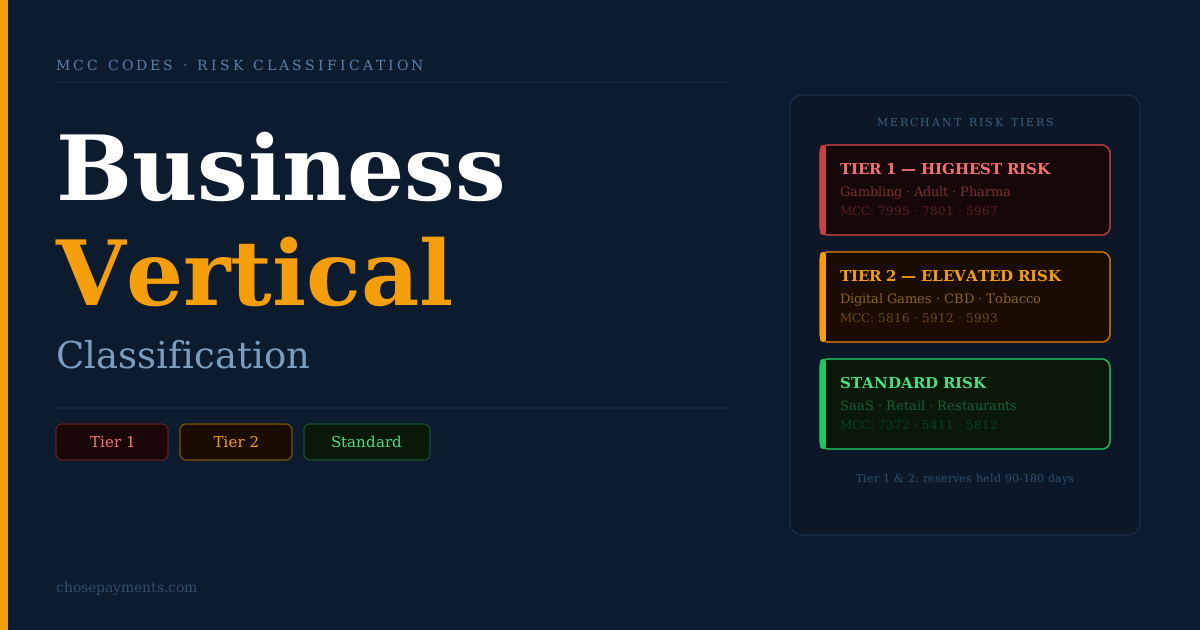
Understanding how your business vertical is classified by payment processors ( Read more: Link) is the related question - your MCC and your chargeback history are evaluated together when a processor decides whether to keep your account.
Frequently Asked Questions
Common questions about chargebacks and refunds for digital product businesses.
What is the average chargeback rate for digital products?
The global average chargeback rate for digital goods is approximately 1.8%, compared to 0.5% for physical product ecommerce — more than triple the rate. This gap is driven by the absence of physical delivery confirmation, high rates of friendly fraud, and subscription billing disputes where customers forget they subscribed or dispute rather than cancel.
What is friendly fraud and why does it affect digital businesses more?
Friendly fraud is when a customer disputes a transaction they legitimately authorised, they received and used the product, then filed a chargeback claiming they didn't. It accounts for approximately 75% of all ecommerce chargebacks. Digital businesses are disproportionately affected because there is no physical item to return, making the fraud lower-risk for the cardholder and harder for merchants to disprove with server logs and access records.
At what chargeback rate will Stripe or PayPal suspend my account?
Stripe and PayPal don't publish exact thresholds, but based on reported merchant experience, Stripe typically issues warnings at dispute rates approaching 1–2%. Visa's excessive threshold dropped to 1.5% in April 2026. Treat 0.5% as your operational target and 1% as the point requiring active remediation before the processor acts. Once Stripe suspends an account, funds are typically held for 90–180 days.
What is the Mastercard Excessive Chargeback Program?
Mastercard's Excessive Chargeback Program (ECP) designates merchants with 100+ chargebacks per month and a ratio above 1.5% for two consecutive months as an Excessive Chargeback Merchant (ECM). Fines begin at $1,000/month, escalate to $5,000/month in months 4–6, and reach $25,000/month from month 7 onward. An additional Issuer Recovery Assessment of $5 per chargeback above the first 300 applies from month 4. High Excessive Chargeback Merchants (300+ chargebacks, above 3%) face a faster escalation schedule.
Should I offer refunds on digital products to avoid chargebacks?
For most digital products, yes. A refund costs the transaction amount (note: Stripe does not return the original 2.9% + 30¢ processing fee). A chargeback costs the transaction amount plus a $15–25 dispute fee, counts against your dispute ratio, and requires staff time to respond. A reasonable refund window of 7–14 days, before substantial product use, reduces chargebacks significantly more than it costs in refunds.
What evidence should I submit when disputing a chargeback on a digital product?
The most effective evidence includes: the original transaction receipt with timestamp and IP address, the email receipt sent to the customer, server access logs showing the product was accessed after purchase, customer support communications, your refund policy as displayed at checkout, and records showing the billing descriptor the customer would have seen. Submit everything as a single organised PDF within the 20–30 day response window.
Does 3DS2 protect digital merchants from chargebacks?
3D Secure 2 (3DS2) shifts liability for fraudulent chargebacks from the merchant to the issuing bank when authentication is successful. This covers the "unauthorised transaction" dispute reason, where the cardholder claims they didn't make the purchase. It does not protect against friendly fraud where the customer claims they didn't receive or access the digital product. 3DS2 removes the most clear-cut fraud exposure but does not eliminate dispute risk.
What is the MATCH list and can it affect my business?
The MATCH list (Member Alert to Control High-Risk Merchants) is a Mastercard-maintained database of merchants terminated by acquirers for cause - excessive chargebacks, fraud, illegal activity, or network rule violations. A listing remains active for five years and is checked by virtually every acquirer during underwriting. A listed business will be refused by most acquirers. MATCH listings cannot be removed early except in narrow circumstances, making prevention the only reliable strategy.