Ecommerce/Chargeback Thresholds High Risk Processors
Beyond the 1%: Navigating Chargeback Thresholds With High Risk Payment Processors
For many online businesses the moment chargebacks cross one percent something unexpected happens.
Payments suddenly become difficult.
Accounts are reviewed. Funds are held. Sometimes processing is terminated entirely. This is because the payments ecosystem is designed around strict dispute thresholds that acquiring banks and payment processors must monitor closely.
For businesses operating in sectors such as supplements, digital goods, ticketing, travel, or subscription services, chargebacks are not always a sign of fraud or poor business practices. They are often simply a structural reality of the industry. Understanding how chargeback thresholds work and how different payment providers approach them is essential for businesses operating in higher risk environments.
Why High Chargeback Businesses Struggle With Standard Payment Processors
Payment processors do not operate independently. They exist within a system governed by card networks such as Visa and Mastercard. These networks monitor dispute activity across all merchants in order to protect the integrity of the payment ecosystem.
When a merchant generates too many disputes the acquiring bank that sponsors the merchant account becomes financially responsible for potential losses. For this reason many mainstream processors prefer merchants whose dispute rates remain comfortably below one percent of transactions.
Businesses that regularly approach or exceed this level may face several challenges:
- Accounts may be reviewed more frequently
- Processing limits may be imposed
- In severe cases merchant accounts may be terminated
This is not necessarily a judgment on the business. It is simply how risk is managed within the card network system.
Understanding Chargeback Thresholds
A chargeback ratio measures the percentage of transactions that result in disputes. The typical formula is chargebacks divided by total transactions in the same period.
For example, if a merchant processes 10,000 transactions in a month and receives 120 chargebacks, the dispute ratio is 1.2 percent.
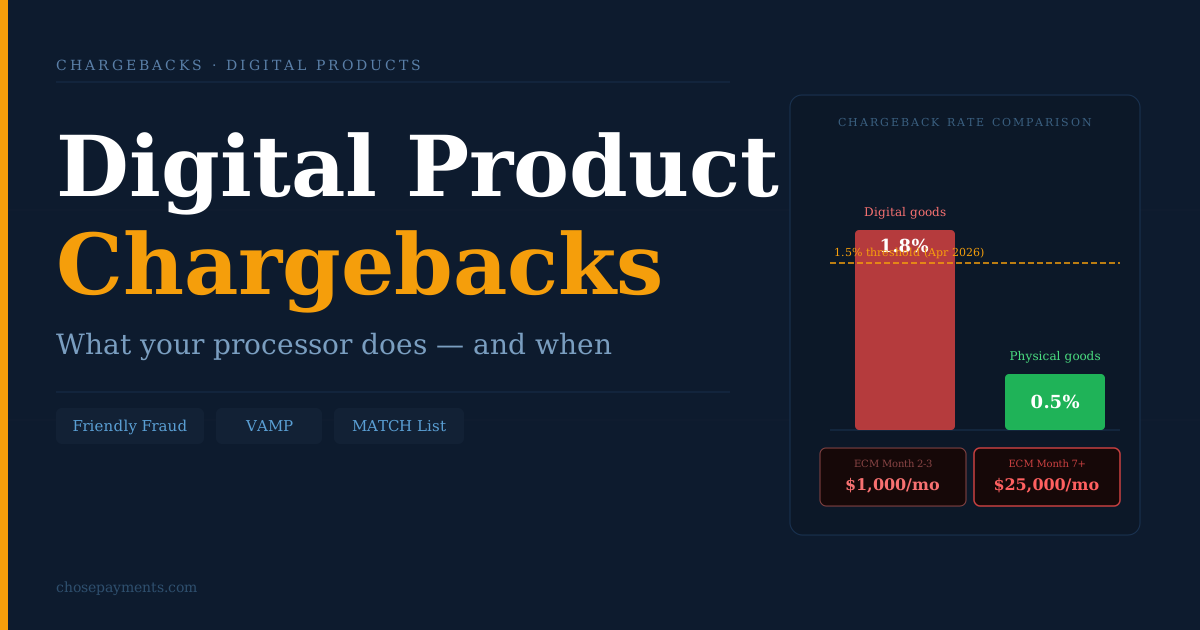
Card networks monitor merchants through formal programs that track dispute activity. Visa operates the Visa Monitoring Program which introduces different risk tiers depending on the dispute ratio and the total number of disputes.
| Monitoring Level | Dispute Ratio Threshold | Potential Consequences |
|---|---|---|
| Early Monitoring | Around 0.65% | Warning notifications, enhanced reporting |
| Standard Monitoring | Around 0.9% | Monitoring fees, required action plans |
| High Risk Monitoring | Above 1.8% | Significant fines, potential termination |
Payment processors therefore implement their own internal thresholds that often mirror or tighten these network standards.
How Chargeback Limits Differ Between Payment Processors
Not all payment providers approach dispute risk in the same way. Mainstream platforms tend to operate with stricter thresholds because they serve a broad range of low risk businesses.
Stripe
Stripe typically expects merchants to maintain dispute rates well below one percent. Businesses approaching this level may receive warnings or be asked to improve dispute management processes. For more context on how Stripe handles risk, see our guide on{" "} why Stripe freezes accounts .
PayPal
PayPal operates a dispute monitoring system where merchants with dispute rates above certain thresholds may face account limitations or additional monitoring.
Specialized High Risk Processors
Some acquiring banks and specialized processors are designed specifically for industries that naturally produce higher dispute volumes. These providers may accept merchants with higher dispute ratios provided that the business demonstrates strong operational controls and clear fraud management practices.
Instead of focusing only on the dispute ratio they evaluate factors such as:
- Customer communication practices
- Refund policies
- Fraud prevention systems
- Historical dispute resolution performance
For businesses operating in high risk sectors these specialized processors can provide significantly more stability. Learn more about how{" "} payment provider risk models {" "} determine what level of dispute activity they can tolerate.
Identifying Your Chargeback Risk Profile
Before selecting a payment processor businesses should understand their own dispute exposure. Several indicators help determine chargeback risk.
Industry type
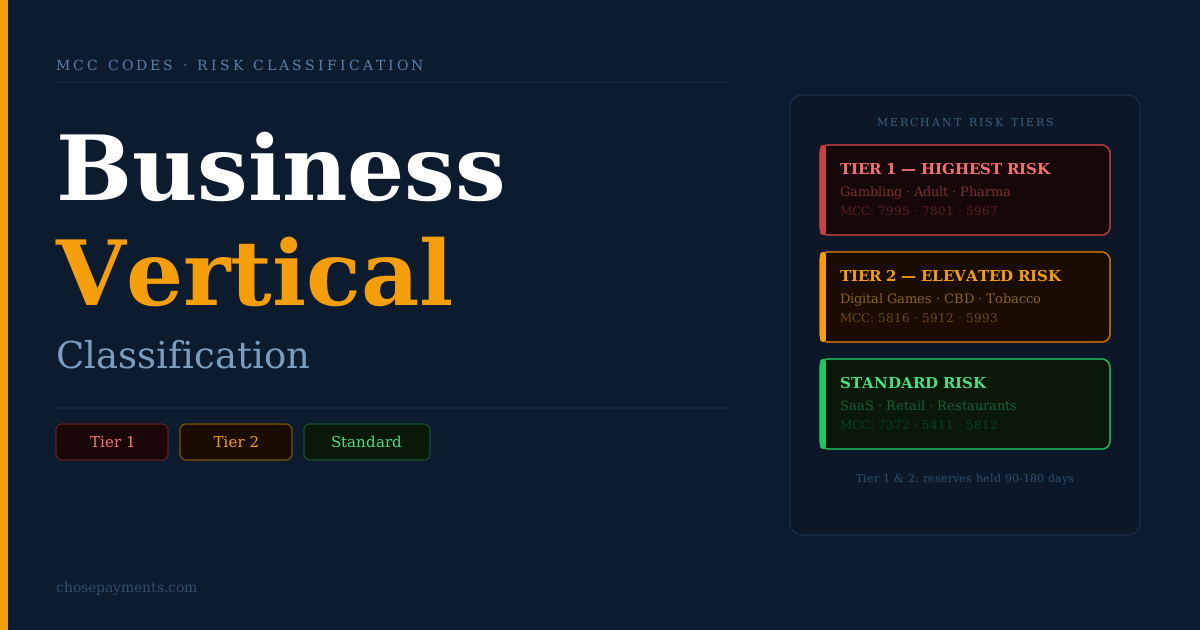
Some sectors consistently experience higher dispute rates because customers purchase with uncertainty or delay between purchase and delivery. Examples include travel bookings, digital services, subscription products, and online training programs.
Delivery timelines
Long fulfillment timelines increase the probability of disputes because customers may forget transactions or question delays.
Cross border sales
International transactions are more likely to be declined or disputed due to currency conversion issues or unfamiliar billing descriptors.
Customer communication
Businesses with slow support responses or unclear refund policies tend to generate more disputes. By analyzing these variables businesses can estimate whether their chargeback exposure is likely to exceed standard processor thresholds.
Strategies for Reducing Chargebacks in Higher Risk Environments
Even in industries with elevated dispute rates many chargebacks can be prevented through operational improvements.
Improve transaction recognition
Customers often dispute charges simply because they do not recognize the billing description. Using clear billing descriptors that reflect the brand name can prevent unnecessary disputes.
Strengthen fraud screening
Fraudulent transactions are one of the most common causes of chargebacks. Modern fraud detection tools can identify suspicious transactions before they are processed. For a deeper look at this topic, see our guide on{" "} chargebacks and how to avoid them .
Set clear refund expectations
Transparent refund policies reduce the likelihood that customers escalate complaints through their banks. Refund instructions should be easy to find and easy to follow.
Respond quickly to customer complaints
Customers often file chargebacks when they feel they cannot reach the business directly. Fast customer support response times significantly reduce dispute rates.
Monitor dispute data carefully
Businesses should review dispute reports regularly to identify patterns such as certain products or regions producing higher dispute volumes. Addressing these patterns early prevents escalation.
Finding the Right Payment Partner for High Chargeback Businesses
Businesses operating with elevated dispute exposure must choose payment providers carefully. The right processor is not simply the one with the lowest fees. It is the provider whose risk tolerance aligns with the merchant's business model.
Specialized processors understand that some industries naturally generate higher dispute levels and evaluate merchants more holistically. Instead of focusing only on the dispute ratio they consider the overall operational maturity of the business.
ChosePayments helps businesses navigate this complex landscape through its payment provider diagnostic platform. The system evaluates key variables including:
- Industry type
- Transaction volume
- Average order value
- Customer geography
- Historical dispute levels
These inputs are compared against the known underwriting preferences of different payment providers. For merchants operating near or above typical chargeback thresholds this alignment can mean the difference between constant account instability and long term processing reliability.
Managing Chargebacks as Part of Business Strategy
Chargebacks will never disappear entirely from online commerce. But businesses that understand how dispute thresholds work can manage them proactively rather than reactively.
Improving operational processes, implementing strong fraud prevention tools, and selecting payment providers aligned with the business model all contribute to a more stable payment environment.
For businesses operating in sectors where disputes are an unavoidable reality, the goal is not zero chargebacks. The goal is maintaining dispute levels within ranges that processors and card networks can support sustainably.
Find processors that match your dispute profile
Run your risk profile to see which payment providers can support your chargeback level and business model. Run My Risk Profile →