Ecommerce/High Risk To High Growth
From High-Risk to High-Growth: A Strategic Guide to eCommerce Payment Processing
The phrase "high-risk eCommerce" is often misunderstood.
For many founders, the label appears suddenly, usually when a payment processor rejects an application or places reserves on an account. What looks like a judgment on the business is often simply a reflection of how payment providers manage risk.
In reality, many of the fastest-growing online businesses start in categories that processors consider high-risk. Subscription businesses, cross-border sellers, marketplaces, and digital products all carry characteristics that can trigger stricter underwriting.
Understanding how payment providers evaluate these businesses is the first step toward turning a high-risk profile into a scalable payments strategy.
The Payment Processing Challenges High-Growth eCommerce Businesses Face
Payment processors operate in a tightly regulated ecosystem. Acquiring banks are responsible for the merchants they onboard, and card networks such as Visa and Mastercard monitor fraud, chargebacks, and compliance levels across the system.
When a merchant's activity creates potential financial liability, for example through high refund rates or delayed delivery, the processor becomes exposed to that risk.
This is why high-growth eCommerce businesses often encounter:
- Account rejections during onboarding
- Rolling reserves or delayed payouts
- Increased fraud monitoring
- Sudden account reviews after rapid growth
None of these necessarily indicate wrongdoing. They often reflect how the payment ecosystem protects itself from financial exposure.
Visa's risk standards explicitly require acquirers to define their risk appetite and adjust underwriting policies depending on merchant activity, geography, and transaction patterns.
In other words, approval decisions are rarely random. They are based on structured risk evaluation.
What "High-Risk" Actually Means in eCommerce
The term high-risk does not simply refer to controversial industries. In payment processing, risk can arise from several operational factors.
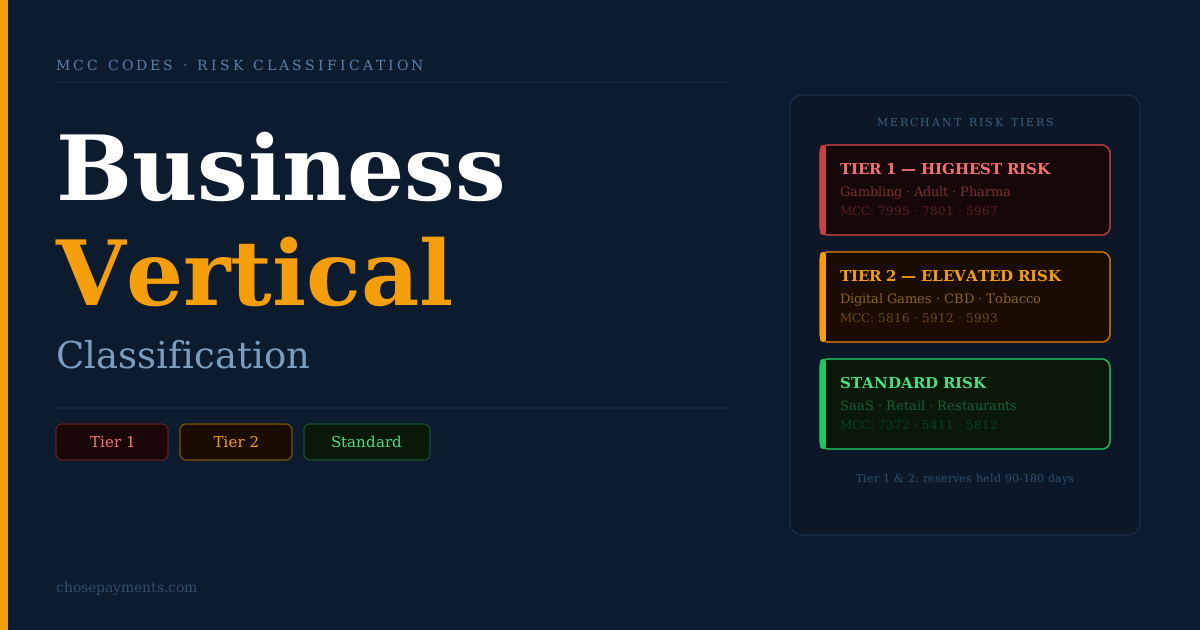
1. Industry Risk
Some sectors historically generate more disputes or regulatory scrutiny. Examples include:
- Subscription services
- Travel and ticketing
- Nutraceuticals and supplements
- Digital goods
- CBD or emerging regulated products
These industries tend to experience higher refund rates or delayed fulfillment, both of which increase the probability of chargebacks.
2. Business Model Risk
Payment providers closely analyze how revenue is collected and delivered. Models that introduce future liability include:
- Pre-orders or delayed shipping
- Recurring subscription billing
- Marketplaces holding funds for third parties
- Dropshipping with uncertain fulfillment
Businesses that collect payment months before delivering goods are particularly scrutinized because customer disputes can arise long after the transaction.
3. Operational Risk
Even a low-risk product can become high-risk if operational indicators suggest instability. Processors examine signals such as:
- Sudden transaction spikes
- Large average order values
- High refund rates
- Weak fraud controls
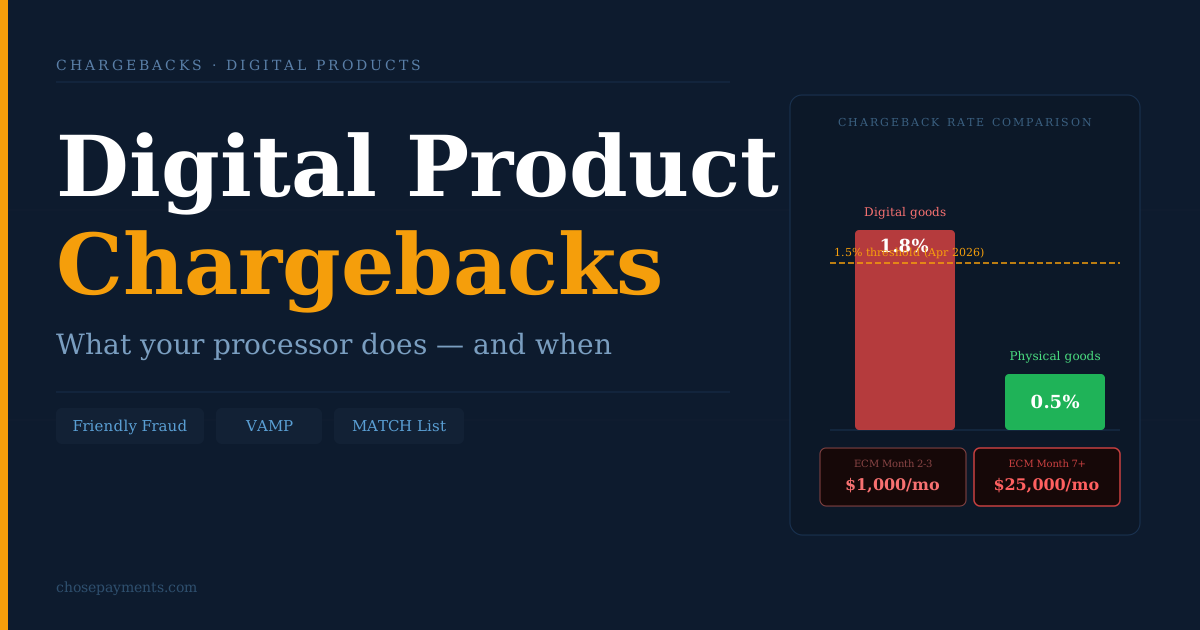
A chargeback rate above 1% of transactions is commonly viewed as a warning threshold in card network monitoring programs.
4. Geographic Exposure
Selling internationally introduces additional complexity. Cross-border commerce may involve:
- Regions with higher fraud rates
- Currency conversion risks
- Regulatory compliance requirements
- Export restrictions
For this reason, global eCommerce businesses often require processors that specialize in international payments.
The Risk Profile Assessment: Understanding Your Merchant Tier
Before selecting a payment processor, merchants should perform a simple risk assessment of their own business. The key questions most underwriters ask include:
| Factor | What Underwriters Ask |
|---|---|
| Industry | What products or services are being sold? |
| Fulfillment | How long after payment does delivery occur? |
| Transaction Volume | How much monthly volume is expected? |
| Average Order Value | Are transactions typically low-value or high-ticket? |
| Chargeback History | Has the business experienced disputes with previous processors? |
| Geographic Reach | Are customers domestic or international? |
Businesses that understand their own profile are significantly more likely to obtain stable payment processing.
Strategic Processor Selection: Choosing for Growth, Not Just Approval
Many merchants make the mistake of selecting a payment processor solely based on approval speed or pricing. But for high-growth businesses, the more important question is: will this provider still support the business two years from now?
Strategic processor selection focuses on several deeper capabilities.
1. Flexible Underwriting
Some processors specialize in early-stage merchants but become restrictive as volume grows. Others are built to support scale from the beginning. Choosing a provider aligned with your growth trajectory reduces the risk of future account reviews or sudden closures.
2. Advanced Fraud Prevention
High-growth eCommerce inevitably attracts fraud attempts. Providers with strong risk tools help merchants reduce disputes before they escalate. Common capabilities include:
- Machine-learning fraud detection
- Address verification (AVS) and CVV checks
- Device fingerprinting
- Transaction monitoring
3. Global Payment Infrastructure
For international sellers, payment infrastructure must support:
- Multi-currency processing
- Regional payment methods
- Local acquiring banks
These capabilities improve authorization rates and reduce cross-border decline rates.
4. Chargeback Management
Processors that provide detailed dispute data and automated alerts allow merchants to respond quickly before chargebacks accumulate. Maintaining dispute rates below card network thresholds is critical to long-term processing stability.
How ChosePayments Supports High-Growth eCommerce Businesses
One of the most difficult challenges merchants face is identifying which processors are likely to approve and support their business model. Many merchants apply to multiple providers blindly, often triggering repeated rejections.
ChosePayments was designed to simplify this process. The platform uses a structured diagnostic assessment that evaluates key risk indicators such as:
- Industry category
- Transaction volume
- Business model
- Geographic markets
- Chargeback exposure
These signals are mapped against the known underwriting preferences of different payment providers. Instead of guessing which processor might approve the business, merchants receive guidance on providers whose risk appetite aligns with their profile.
Preparing Your Business for Payment Processor Approval
Even with the right processor, preparation matters. Businesses that present a clear operational profile during underwriting are far more likely to secure stable processing.
Document Your Operations Clearly
Processors review websites, policies, and business documentation carefully. Ensure your website includes:
- Clear product descriptions
- Visible refund and return policies
- Transparent customer support contact details
Maintain Strong Chargeback Control
Disputes are one of the most important signals processors monitor. To reduce chargebacks:
- Respond quickly to customer complaints
- Ensure billing descriptors are recognizable
- Implement fraud screening tools
Keeping disputes well below 1% of transactions helps maintain good standing with card networks.
Provide Realistic Growth Projections
Underwriters are wary of merchants who claim unrealistic volume. Supporting projections with financial data, marketing plans, or historical sales helps establish credibility.
Demonstrate Financial Stability
Payment providers may review credit history or financial records. Resolving outstanding debts or tax issues before applying can prevent avoidable rejections.
From Risk to Scale
Being labeled "high-risk" does not mean a business cannot scale.
In many cases, the most successful eCommerce companies simply operate in sectors that require more careful payment infrastructure. The key is understanding how processors evaluate risk and aligning with providers that are comfortable supporting that growth.
With the right preparation and the right processing partner, businesses that start as high-risk can evolve into stable, high-growth merchants.
Find out which processors fit your eCommerce risk profile
Our diagnostic maps your industry, model, and volume against each provider's underwriting appetite. Run My Risk Profile →